Asia Cup 2025 is now around the corner, and cricket fans around the world are eagerly waiting to see the biggest competition take place on the field. But this time, there has been a surprising twist that has caught everyone’s attention. Team India will take to the field without a jersey sponsor for the first time in its cricket history.
Thank you for reading this post, don't forget to subscribe!A team that has always been supported by some of the biggest brands in the world, but this time the team has not received the support of a single brand. Due to this, many questions have arisen among fans, experts and cricket lovers. What went wrong? Why couldn’t BCCI sign a sponsorship deal before such a high-profile tournament?
Importance of Jersey Sponsorship in Cricket
Jersey sponsorship is very important for a team. It helps the national board and teams to run modern cricket. In most countries, cricket’s revenue comes mainly from sponsorship, ticket sales and ICC revenue, in addition to broadcasting rights.
Jersey sponsorships play a pivotal role in modern cricket, shaping not just the financial health of teams but also the overall fan experience. For brands, it’s an unparalleled opportunity to gain visibility in front of millions of passionate cricket followers, while for teams, it acts as a crucial lifeline that funds everything from player development to world-class training facilities. In essence, sponsorship is not just a business deal it’s a partnership that helps the game grow and thrive.
From a brand perspective, the benefits are massive. Every time a team takes the field, the sponsor’s logo is seen by millions of viewers, creating strong recall value and global exposure that few other platforms can match.
Cricket’s international fan base ensures that companies don’t just reach local audiences but connect with diverse markets around the world. Moreover, when a brand aligns itself with a team, it taps into the team’s values, identity, and emotional connect with fans transforming a simple logo into a symbol of shared loyalty and passion.
Many brands even use such partnerships to break into new categories or strengthen their presence in industries like banking, automotive, or telecom.
For teams and players, jersey sponsorships are far more than a financial transaction. The money generated often goes directly into critical areas such as equipment, facilities, coaching staff, and grassroots development. It also supports player contracts and welfare, helping cricketers build not just successful careers but strong personal brands. Beyond finances, sponsors often contribute to fan engagement initiatives, bringing supporters closer to the game through campaigns, merchandise, and interactive experiences.
Ultimately, the ecosystem thrives when sponsorship works well. Teams get stability and resources, brands gain visibility and trust, and fans enjoy a richer, more connected cricketing experience.
This mutual growth makes jersey sponsorship a cornerstone of the sport’s modern success and highlights why its absence in a high profile event like the Asia Cup 2025 is making headlines worldwide.
History of Team India Jersey Sponsors
The front of Team India’s jersey has always been the most valuable space in Indian sports marketing, giving brands unmatched exposure to millions of fans worldwide. But a look at its past sponsors tells a striking story many of them have faced controversies, financial troubles, or sudden exits.
This repeated pattern has even led to talk of a so-called “jersey curse” linked to the Men in Blue’s kit.
(1) ITC Limited (Wills & ITC Hotels) 1993 to 2001
The Sponsorship:
The early 1990s marked the beginning of a new era for Indian cricket jerseys, when ITC Limited became the very first major sponsor to place its brand name on Team India’s kit.
Through its Wills brand and ITC Hotels, the company not only gained massive visibility but also became deeply associated with the rise of Indian cricket during that decade.
The bold red “Wills” logo across the chest became iconic, with legendary players like Sachin Tendulkar, Sourav Ganguly, Rahul Dravid, and Anil Kumble proudly donning it during some of the most memorable matches of the 90s.
For fans, that jersey wasn’t just sportswear it was an emotion. The “Wills” era coincided with India hosting the 1996 Cricket World Cup, a time when cricket fever in the country was at its peak. The sponsor’s presence helped cement a visual identity that still sparks nostalgia among cricket lovers. It was the first time fans realized that the logo on the chest wasn’t just a brand it was part of the team’s journey.
The Exit :
Despite its strong association with Team India, ITC’s sponsorship came to an end in 2001 due to a sweeping change in government policy.
As global sentiment turned against tobacco advertising, India also moved to implement stricter laws that limited or completely banned the promotion of tobacco products. Since “Wills” was a cigarette brand, the company had no choice but to withdraw from cricket sponsorship.
The tobacco ad ban made it impossible for ITC to continue showcasing its brand on the Indian jersey. The end of the “Wills” era thus became the first big example of how external policy changes, rather than cricket itself, can end a high-profile sponsorship deal. It set a precedent for the future, reminding boards and brands alike that sponsorships are vulnerable not only to economics but also to wider regulatory shifts.
(2) Sahara India Pariwar 2001 to 2013
The Sponsorship :
When the Wils logo of the ITC fell from the Indian jersey, in 2001 the Sahara India family joined as a new sponsor.
Launched as a business deal, the organization soon turned into one of the longest and most memorable organizations in Indian cricket history. For more than a decade, the “Sahara” logo was proud of the blue jersey, which created a different identity of Team India.
This was an unprecedented age for Indian cricket. Sourav Ganguly waged fans at Lord’s in 2002, reminiscent of the golden World Cup final of 2003, the rise of MS Dhoni and the T20 World Cup of 2007 and the golden moments of the ICC Cricket World Cup win at the 2011 Wankhede.
During every prestigious victory, the Logo of the Sahara was there – the brand’s house -to -house name was created and gave Indian cricket a new direction on the world stage.
The Exit :
But after more than a decade, the partnership ended in 2013. Unlike ITC, this was not because of the regulation but because of its own financial and legal difficulties of Sahara.
The company had a chance to shut down due to the growing Muscalio on its business transactions. Especially in relation to regulatory disputes with SEBI (Securities and Exchange Board of India). With the growing financial pressure, it was impossible to continue supporting one of the most expensive sponsorship in world cricket.
Exit the Sahara ended an emotional chapter for both players and fans. For many, the “Sahara India” jersey is still reminiscent, which is a symbol of the era of transition, while Indian cricket transformed into the world champion with optimistic challenges. It is a reminder that when the company behind their back, and the strongest and most stable sponsorship can collapse.
(3) Star India — 2014 to 2017
The Sponsorship :
After the end of the Sahara’s long and emotional relationship, Star India’s next name was shown on Team India Jersey in 2014. As one of the largest media and broadcast giants in the country, the jersey of the star was well admitted to the sponsorship.
A broadcaster who went beyond the TV screen and became part of the action. His prestigious star -shaped logo on the chest became a prominent identity of the rising role of media and entertainment in modern cricket.
In this age, Team India went through the phase of reconstruction and transition. Leadership raids from MS Dhoni to Virat Kohli, young stars like Rohit Sharma and Ajinkya Rahane were strengthening their position, and India was moving towards becoming a strong power in Test cricket.
Star logo attended many memorable tours and ICC events, which became a recognizable part of India’s cricket trip over the years.
The Exit :
Despite being a powerful brand, the star of the star on the Indian jersey was a relatively short period.
The 2017 Pashi company decided not to renew its sponsorship deal as the strategy was a change. The star was already spending huge on the broadcast rights of cricket and instead of splitting between telecast and team sponsorship, she chose to unite investment and basically, they chose to focus on the experience of watching cricket instead of jersey space.
Star India’s exit ended a short but also interesting partnership. Although not as long or as controversial as Sahara, he showed that sponsorship decisions are not always about financial crisis but also for their own personal reasons.
(4) Oppo Mobiles 2017 to 2019
The Sponsorship :
The Chinese smartphone company Oppo made major headlines by obtaining Team India Jersey’s sponsorship rights in a deal worth Rs 9,9 crore for a five -year record -breaking Rs 9,9 crore. At that time, it was one of the most expensive sponsorship agreements in world cricket, which strengthens the intention of making a bold entry in the Indian market.
The bright green logo of Oppo on blue jersey was difficult, so the company chose to show the white color logo during some important tournament in India, including the 2017 ICC Champions Trophy in England, the Asia Cup in 2019 and the start of the 2019 ICC World Cup.
This period was also relevant with a new rise as Virat Kohli’s aggressive and influential Betting and captain, making Oppo’s branding more visible and impressive.
The Exit :
With the BCCI’s 3 years contract But Oppo left the sponsorship in two years, which was the main cause of the financial crisis. The deal, despite being historic, proved to be very expensive for Oppo, especially due to the growing competition from competitors like Vivo, Xiaomi and Realme in the Indian smartphone market.
The enormous sponsorship costs were not compatible with the company’s new marketing strategy, and it was difficult to sustain it.
(5) Byju’s 2019 to 2023
The Sponsorship :
After Oppo exited in 2019, India’s leading edtech company Byju’s stepped in and took over the jersey sponsorship rights. This move marked a significant shift for the first time, a homegrown Indian startup was emblazoned on the chest of the Men in Blue.
Byju’s logo was released during India’s West Indies tour in 2019, and he quickly became a regular feature at major ICC events, including the 2021 T20 World Cup, 2022 Asia Cup and 2023 ICC World Test Championship Finals. This time was appropriate for Biju, as the brand was aggressively expanding its footprint globally.
This sponsorship increased Biju’s credibility. In a country where both cricket and education have emotional values, the fans have been thrilled to see the Indian adtech brand on the team’s jersey.
The Exit :
Maintaining Team India’s expensive jersey sponsorship became impossible for BYJU. Initially, Biju tried to extend the deal but eventually decided to withdraw the contract in 2023, and handed over the sponsorship rights to the BCCI. What started as a moment of pride for the Indian brand ended under the shadow of financial pressure and controversy.
(6) Dream11 2023 to 2025
The Sponsorship :
In mid 2023, fantasy sports leader Dream11 signed a marquee three-year jersey sponsorship deal with the BCCI worth approximately ₹358 crore (around USD 44 million Doller) a landmark moment that brought the logo of a homegrown tech firm front and center on Team India’s jersey.
The Exit :
The deal ended in the 2025, which was the man reason for the new law, the Promotion and Regulation of Online Gaming Act, who decided to ban the online fantasy gaming app and banned all related ads or sponsorship.
The exit was not just a business decision; it was a regulatory necessity. It left the BCCI scrambling to find a replacement before the Asia Cup began prompting bold calls, like in-tournament matches potentially featuring no front-of-shirt sponsor.
Dream11 Sponsorship Deal and Sudden Exit
In July 2023, when Dream11 became the sponsor of India’s jersey, it was celebrated as a landmark partnership. For the first time, a fantasy sports platform’s logo was displayed on the front of India’s iconic blue jersey.
The three-year deal, worth about ₹358 crore (around USD 44 million Doller), promised massive visibility for the brand, especially with India hosting the ODI World Cup that year. But as we move closer to the Asia Cup 2025, the story has taken a dramatic turn.
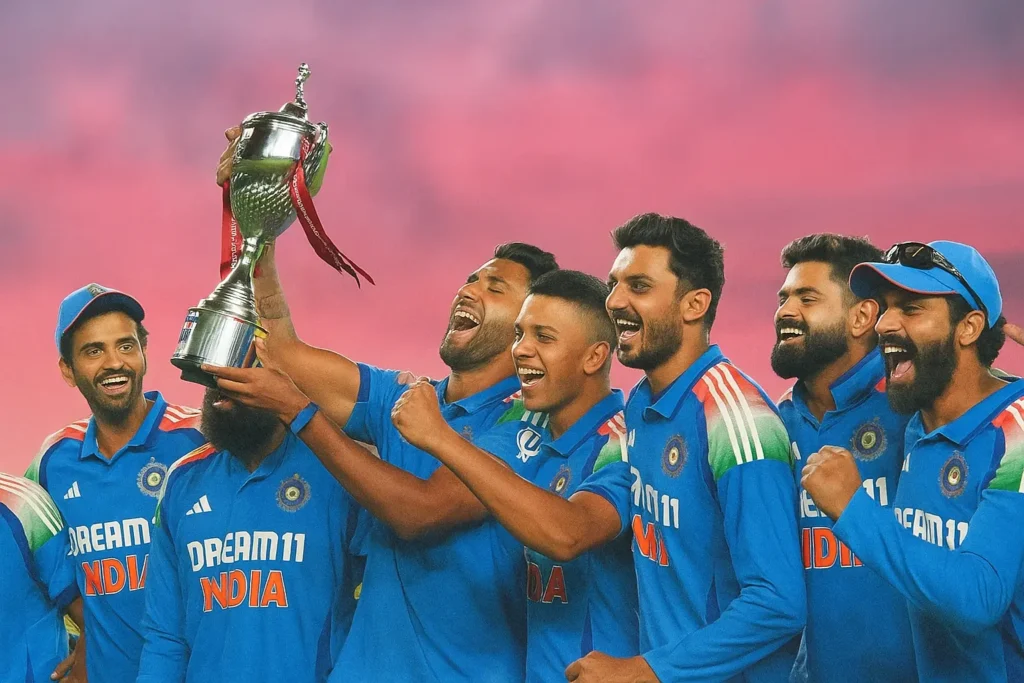
For Dream11, this deal was not just about brand exposure. The company had already built a strong presence in India’s sports ecosystem through IPL tie-ups and endorsements with leading cricketers. However, being on the jersey of the national team was a huge reputation boost.
It placed Dream11 alongside legacy sponsors such as Sahara, Star India, and Byju’s. At the time, fantasy sports were booming, cricket viewership was rising, and Dream11 was at its peak. Everything seemed perfect heading into major tournaments like the ODI World Cup and the upcoming Asia Cup 2025.
That changed in August 2025, when the Government of India introduced the Online Gaming Promotion and Regulation Act, 2025. The law banned all forms of real-money online gaming, placing fantasy sports platforms like Dream11, MPL, and My11Circle under the same bracket as betting and gambling.
It also prohibited these companies from advertising, promoting, or sponsoring sports events. The timing was crucial, because it came just weeks before the Asia Cup 2025, shaking the sponsorship ecosystem of Indian cricket.
For Dream11, the law was a turning point. Even though the company had a valid contract with the BCCI until 2026, continuing as a jersey sponsor during the Asia Cup 2025 would have meant breaking the law. Within weeks, Dream11 invoked an exit clause in its agreement and pulled out, abruptly ending its historic association with Team India.
The sudden exit left the BCCI scrambling. With the Asia Cup 2025 fast approaching, India faced the prospect of walking onto the field in blank jerseys something never seen in decades of cricket history.
Fans who eagerly await the Asia Cup 2025 will now witness a rare sight: Team India competing without a sponsor’s logo on their kit. This not only marks a first in Indian cricket but also adds a unique storyline to the tournament.
Dream11’s withdrawal also highlighted a larger reality. No matter how big a sponsorship deal is, it cannot override government regulation. The three-year agreement between Dream11 and the BCCI ended prematurely, serving as a reminder that billion-dollar contracts are always vulnerable to legal changes.
As the Asia Cup 2025 unfolds, this incident stands out as one of the most important off-field stories shaping the future of Indian cricket sponsorship.
Government’s Online Gaming Bill 2025 and Its Impact
In August 2025, the Government of India introduced a law called the Online Gaming Promotion and Regulation Act 2025. This bill shook the entire digital gaming industry overnight and not so much has been affected immediately in Indian cricket, especially when the Asia Cup 2025 is coming.
According to this new law, all money -powered online gaming apps were banned across the country. These included a large gaming platform like Dream 11, MPL and My11circle, where users could create virtual teams and win cash awards. The government justified the decision on the basis of consumer protection, growing addiction concerns and financial risks faced by young players.
Policy manufacturers argued that such sports blinked the line between skills and gambling, and therefore a strong legal structure was needed to protect society.
Dream 11 suddenly moved, BCCI was struggling to find a replacement sponsor just a few weeks before the Asia Cup 2025. For the first time in history, fans will see Team India descending in the field empty jersey without a sponsor logo. This is known by the BCCI officially.
The online gaming bill gives a clear signal to both 2025 brands and sports. That it does not depend on an industry for sponsorship money and strives to try to increase the sources of income, and when the law protects consumers, its sudden implementation has changed the commercial scenario of cricket. With the exit of Dream 11, the BCCI is facing financial challenges before the Asia Cup 2025, which has made this tournament not only a battle on the field but also a turn in the economics of Indian cricket.
Read More : LA 2028 Olympics: T20 Cricket Returns After 128 Years with Six Teams
India Playing Asia Cup 2025 with Blank Jerseys
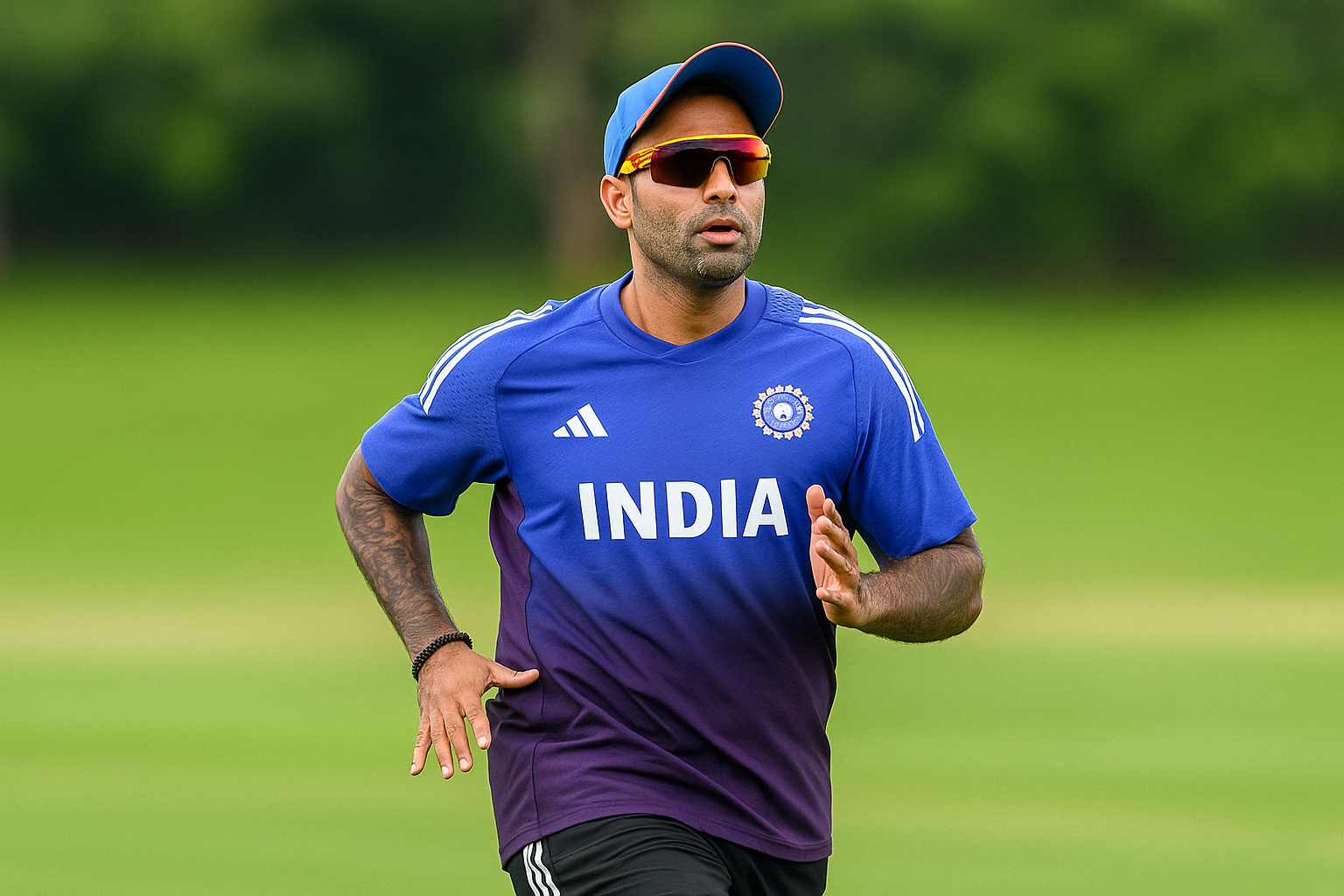
While the cricket world is preparing for the Asia Cup 2025, one thing is impossible to miss, Team India will land with a clean jersey, with no common main sponsor logo.
Why the Blank Jersey?
The Asia Cup has become one of the most controversial topics in empty jersey cricket of India before the Asia Cup 2025. A sponsorship agreement of ₹ 358 crore between Dream 11 and BCCI, which was to last for three years, ended in just two years.
After the new online gaming act was implemented, such sponsorship was not allowed. As a result, Team India will land on the Asia Cup 2025 without a sponsor logo. Fans of such a situation never expected.
What Fans Are Seeing
As the Asia Cup 2025 is set to begin on September 9, fans are looking at a rare and historical moment. The BCCI set a deadline for the new sponsorship bid to mid -September, but no brand could be finalized in a timely manner.
This means that Indian players are entering the Asia Cup 2025 with a jersey on which no sponsor has no name. Such an unusual scenario is almost never heard of ICC events, which makes the Asia Cup 2025 more important.
A Different Revenue Path Ahead
To exit the loss of sponsorship before the Asia Cup 2025, BCCI quickly released a new sponsorship tender. The board is now demanding ₹ 3.5 crore for bilateral matches and ₹ 1.5 crore for multilateral events, which is much higher than the previous rates.
This shows that even though Team India is without a sponsor during the Asia Cup 2025, the chest space on the jersey is one of the most premium places in the cricket world.
Financial Impact on BCCI and Indian Cricket Economy
When Dream11 pulled out of its ₹358-crore jersey deal, it wasn’t just a brand leaving a shirt it created an immediate commercial hole that rippled across the entire cricket business in India.
The headline number is clear: Dream11 had signed a three-year deal worth about ₹358 crore, and its abrupt termination overnight removed a predictable revenue stream from the BCCI’s books.
Immediate revenue gap for BCCI
The BCCI now has the challenge of filling sponsorship vacancies. As the Asia Cup 2025 is running, time may not be worse. The board aggressively increased its base price, aiming to earn about ₹ 452 crore in the next cycle. However, it will take time to find a sponsor at this rate, and until then, Team India will continue to continue the Asia Cup 2025 in Jersey.
Broader commercial ecosystem hit (broadcast, streaming, advertising)
Fantasy gaming companies were one of the largest advertisers in Indian cricket. Their sudden exit has affected not only the BCCI’s income but also the broadcast, streaming and advertising industries while the global focus is on the Asia Cup 2025.
According to industry estimates, the widespread cricket ecosystem could face around ₹ 7,000 crore shocks, which will add another level of financial stress in this year’s Asia Cup 2025.
Job losses & the gaming industry fallout
The ban on fantasy gaming will not only affect sponsorship but also to larger companies like MPL as companies reduced the performance, while Dream11 reduced the advertising budget drastically.
This contraction has affected advertising agencies, content makers and sports suppliers. And now the problem is, the effects of this will now be the most common during the Asia Cup 2025, when the absence of sponsor logo on India’s jersey will become a symbol of disruption scale.
BCCI’s Search for a New Sponsor
While Dream 11 withdrew its sponsorship of ₹ 358 crore amid the new gaming ban, there was immediate pressure on the BCCI, which led to the Asia Cup 2025, which began on September 9, the board would face an empty space on Team India jersey.
Launching the Bidding Process
On September 2, the BCCI official announced the invitation (IEOI) for the national team’s main sponsorship rights. He limited eligibility, placed a clear ban on fantasy gaming and bids to crypto companies, and set a turnover net worth threshold of ₹ 300 crore to ensure that the finalist had a strong entity. Interested brands have given time till September 16 to submit bids.
Redefining the Price Tag
To make the board’s upcoming sponsorship pressure attractive and reflect the market value, the BCCI increased the sponsorship rate per match. He made the minimum rate of ₹ 3.5 crore per bilateral match and ₹ 1.5 crore per ICC or ACC match, which is a sharp increase of ₹ 3 crore and ₹ 1 crore respectively.
If this amount is completed in an estimated 140 matches in the 2025-28 cycle, the BCCI is expected to earn about ₹ 452 crore, which is about 20% more than the Dream 11 deals.
Jersey Without a Sponsor For Now
The Asia Cup is already running and no new contract has been signed, reports suggest that Team India can launch a tournament without any sponsor logo on their jersey, which is a rare and surprising break from tradition.
Future of Sponsorship in Indian Cricket
Short term higher prices, cautious buyers
The future of sponsorship in Indian cricket looks both promising and challenging after Dream11’s sudden exit. In the short term, the Board of Control for Cricket in India (BCCI) has raised the reserve price for jersey sponsorships, signaling that the slot remains one of the most valuable advertising spaces in the country.
However, brands are expected to be more cautious, as regulatory risks around certain industries particularly online gaming have already disrupted high-profile deals.
This means that the sponsorship ecosystem is now ready to change. As fantasy gaming companies are out of the market, traditional sectors such as banking, insurance, telecom, FMCG, auto and e-commerce are likely to move more aggressively.
These series have long viewed cricket as a safe and effective way to reach India’s vast fans, and the absence of gaming brands creates new opportunities for them.
Another trend that is expected to grow is the diversification of sponsorship assets. Instead of only focusing on the front of the jersey, brands are increasingly eyeing sleeve placements, digital partnerships, in-stadium activations, and innovative fan engagement campaigns.
This redistribution of visibility allows companies to connect with audiences across multiple touchpoints rather than relying solely on one logo spot.
In the long run, the outlook remains positive. India is still the world’s largest cricket market, and as viewership continues to expand through digital platforms, global brands will continue to invest. While the composition of sponsors may shift, the sport’s commercial power is not going anywhere.
What we may see is a more balanced sponsorship ecosystem, with multiple industries sharing the spotlight rather than one sector dominating the space.
FAQs
(1) Why is India playing the Asia Cup 2025 without a jersey sponsor?
Ans: India will play without a jersey sponsor in the Asia Cup 2025 because Dream11, the previous sponsor, had to exit suddenly after the Government of India banned real-money online gaming platforms. Since then, no new sponsor has finalized a deal with the BCCI.
(2) Has this ever happened before in Indian cricket history?
Ans: No, this is the first time in modern Indian cricket history that the team’s jersey will not feature a sponsor logo during a major tournament like the Asia Cup.
(3) What impact does the absence of a jersey sponsor have on the BCCI?
Ans: The absence of a sponsor means a direct loss of sponsorship revenue for the BCCI, which usually runs into hundreds of crores. This revenue is crucial for funding infrastructure, player development, and grassroots cricket in India.
(4) Will India have a new sponsor before the ICC Champions Trophy 2025 or the next big series?
Ans: Yes, it is very likely. The BCCI has already invited fresh bids and is in talks with several major brands from banking, FMCG, auto, and telecom sectors. A new sponsor may be finalized before the Champions Trophy 2025.
(5) How does this affect fans and the Asia Cup 2025 narrative?
Ans: For fans, seeing Team India in a plain jersey will be a rare and historic moment. It highlights how deeply cricket and commercial sponsorships are linked, and adds a unique chapter to the Asia Cup 2025 story.